
Visitors can traverse your website via internal links. They wouldn’t be able to click from one website to another if there were no links. Furthermore, the web crawler for Google would be unable to navigate between pages. Internal links are comparable to blood vessels in the human circulatory system from the SEO standpoint. In a metaphorical sense, they transfer what is frequently referred to as link juice, link equity, or link value. Links are how authority and relevance are transferred from one page to another.
Successful SEO relies heavily on the creation of internal links. When creating internal links for your website, you should be aware of the following. A powerful SEO tactic, particularly for content marketing, is strategic internal linking. Because it’s one of the simplest and most direct ways to see an increase in SEO, I’ve decided to concentrate on internal linking for content marketing in this article. Internal linking between blog posts and other content is also something you can do continuously
What are internal links?
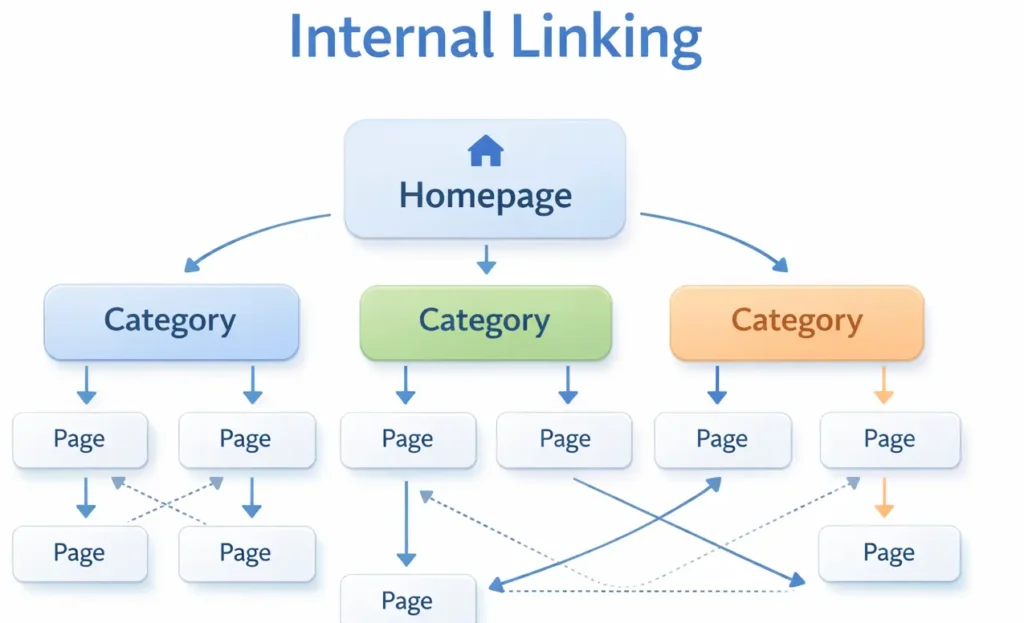
Internal links connect web pages on the same website together. Internal links are valued equally highly by search engines than inbound links. For this reason, having internal links is regarded as a best SEO practices . They are crucial for the navigation of the website as well.
HOW INTERNAL LINKING IS IMPORTANT?
Internal linking is the practise of creating connections from one website to another in an effort to boost target pages’ organic rankings (and overall traffic) through improved site exposure, page equity growth, and keyword targeting anchor text usage.
An effective internal linking strategy raises the ranking of your website and makes it easier for search engine bots and your audience to find what they’re looking for. The better Google and other search engine crawlers can identify, index, and comprehend the pages on your site, the more targeted internal links you have.
TIPS TO FORM A STRONG INTERNAL LINK STRATEGY
EVERY URL SHOULD BE MAPPED TO ITS TARGET KEYWORD
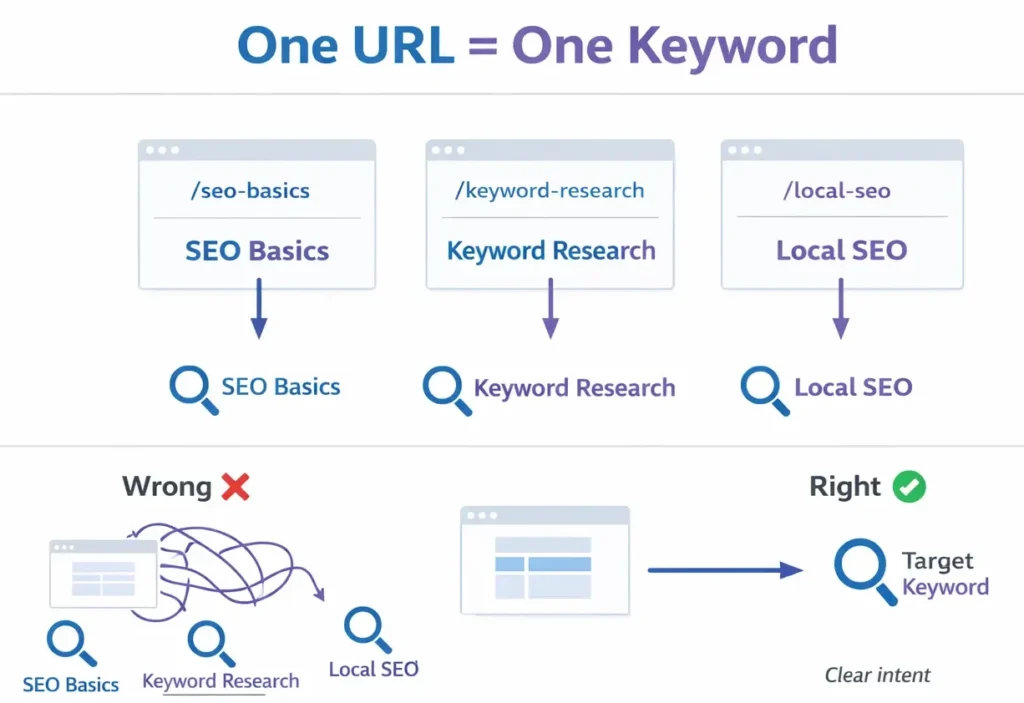
Assigning particular keywords to each page of your website is referred to as “keyword mapping.” The goal is to get understanding of the motivation behind each of your pages. Additionally, Google’s algorithm tries to decipher the purpose of the searcher’s question before displaying results that fit it. It is crucial to give each page a clear purpose and connect it with a term that has a lot of search volume.
Otherwise, you can lose out on a fantastic chance for potential people to find your website. With a tool like Screaming Frog, you may scrape a list of your pages to start keyword mapping. Then export the list to a Google Sheet, and then investigate keywords for each page using a keyword tool.
MAKE CONTENT CLUSTERS
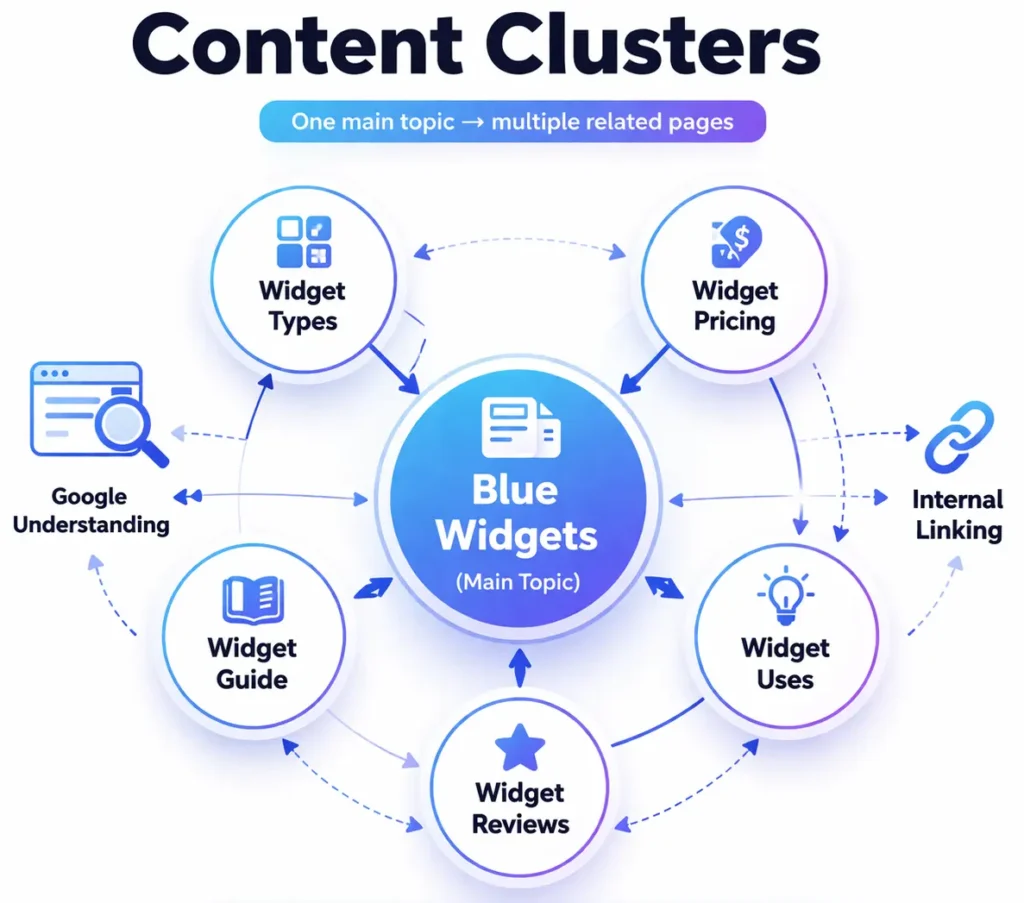
Groups of articles that address a broad subject are called content clusters. Each article you write for Blue Widgets would then link to one another to provide context and depth for that subject. Google will be informed about the primary topic and how it relates to each component of the cluster by your internal linking strategy. This aids Google in determining relevancy, enhancing the reader value of your material.
PERFORM ANCHOR TEXT OPTIMISATION
The text that links can be clicked on is known as anchor text. It’s crucial to not undervalue the value of using the appropriate anchor text. The reason being that the language you use to link to a page informs Google what the page is about. Therefore, when connecting to your pages, it is ideal to include the keyword or a close variation. The keyword map we discussed in the first suggestion can be used to do this. The first stage is to create content that is well-optimized, but if the internal links aren’t obvious, you could lose out on the opportunity for better results. Internal links offer the advantage of giving you complete control over the anchor text.
ADD INTERNAL LINKS TO ORPHAN PAGES IMMEDIATELY
Pages that lack internal links are referred to as orphan pages. Because search engines have a hard time locating them, this may present potential problems. Even worse, if these pages don’t have any navigational links or a sitemap submitted to Google Search Console, they’ll probably never be found. This means that it will never appear in search results. Additionally, pages with no internal links limit the flow of page authority, stifling relevance and lessening the chance to provide context.
FOR BEST INTERNAL LINKING OPPORTUNITIES, USE AHREFS
Did you know that Ahrefs offers complimentary ideas for internal linking? Yes, that is accurate. It’s also quite easy. Visit Ahrefs, create a free Webmaster Tools account there, validate your website, and perform an audit. Once your audit is complete, visit the Link Opportunities page to get your report. This report displays the suggested page to link to, the keyword the target page ranks for, and the source page or page from which to link. A text fragment that indicates the location of the anchor text on the page is also included. You may also target particular sites by using filters to reduce the list of choices
Produce a lot of content.
There must be a large number of internal pages in order to build many internal links. Developing an effective content marketing strategy is the first step in creating an effective internal linking strategy. The two are mutually exclusive. A lot of your material will be linkable if you produce a lot of it. Your internal linking approach will be more effective if there are linkages to more locations.
Conclusion
When internal linking is done with these seven rules in mind, it’s easy. It’s not difficult, complicated, or overpowering. The fantastic thing is that by consistently using internal linking, your link profile will be stronger and your SEO will improve. Even going back and checking your older content to see if there are enough internal links is worthwhile.